From Reactive to Preventive Maintenance: How CMMS Improves Productivity

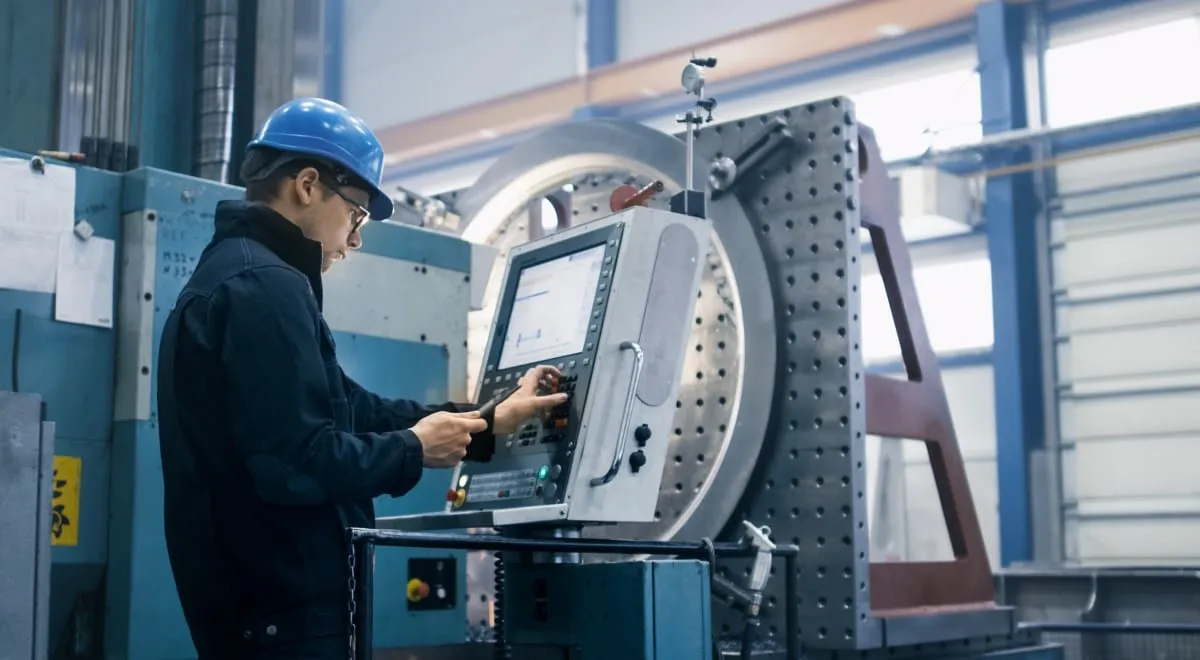
“Prevention is better than cure.” This saying is especially true in maintenance, where a single incident can quickly escalate and have serious consequences for an organization: service interruptions, production downtime, critical equipment unavailability, or simply lost time and reduced productivity.
However, maintaining assets remains a time-consuming activity that requires strong organization and coordination. Technical services directors, facility managers, biomedical engineering leaders, and IT directors manage a wide range of tasks with varying levels of criticality. To improve efficiency and optimize resource management, teams need to be aligned around structured processes for all maintenance and service activities.
The goal should be to anticipate issues before they occur, improve team productivity, and move from reactive maintenance toward preventive and even predictive maintenance. This is where technology — and particularly CMMS software — plays a critical role.
CMMS software: what are we talking about?
Understanding maintenance activities
CMMS — Computerized Maintenance Management System — refers to software solutions that help organizations plan, track, and document all maintenance activities related to their equipment and facilities.
Maintenance itself can be defined as “all technical, administrative, and management actions performed throughout the lifecycle of an asset, intended to maintain or restore it to a condition where it can perform its required function.”
Several points in this definition are particularly important:
- “Maintain or restore” highlights the distinction between preventive and corrective maintenance.
- “Asset lifecycle” emphasizes that maintenance is an ongoing activity, not a one-time intervention.
- “Technical, administrative, and management actions” is perhaps the most important point, because maintenance extends far beyond technical tasks alone.
Consider a ventilation system in a school service center. Technical maintenance involves checking filters, inspecting motors, and completing seasonal servicing. But it also requires managing spare parts, tracking service contracts, and coordinating procurement activities. These administrative and operational tasks related to the asset lifecycle can be just as time-consuming. The same principle applies to medical imaging equipment in a CIUSSS, a municipal pumping station, or an organization’s IT infrastructure.
When it comes to preventive maintenance, success depends on planning and anticipation. Reliability practices and industry frameworks — ITIL® for IT services, APIBQ standards for biomedical equipment, and compliance requirements for regulated facilities — provide valuable guidance.
But to truly improve productivity and gain control over physical assets, organizations need a specialized CMMS solution.
CMMS software automates maintenance activities
CMMS software is specifically designed to plan and manage preventive maintenance operations, whether technical, administrative, or operational. It helps organizations distinguish between different types of maintenance:
- Scheduled maintenance: activities planned according to a fixed calendar.
- Condition-based maintenance: activities triggered by measurements or equipment conditions.
- Predictive maintenance: activities planned by analyzing trends and historical data.
The strength of CMMS software lies in its ability to identify required tasks and coordinate their execution. The system can analyze data from equipment itself — such as disk usage, pump operating hours, vehicle mileage, or medical device cycles — and automatically trigger the appropriate maintenance activities.
Advanced CMMS solutions now incorporate artificial intelligence capabilities that analyze failure and intervention history to predict potential issues and recommend schedule adjustments before failures occur.
Finally, CMMS dashboards provide a complete view of planned and completed maintenance activities, helping organizations achieve significant productivity improvements.
Reduce the risk of incidents and unplanned downtime
By coordinating all preventive maintenance activities through CMMS software, organizations can significantly reduce the risk of failures across their equipment and facilities.
Preventive maintenance supports regular asset renewal and improves the ability to anticipate equipment-related risks. Yet its value is sometimes questioned because it represents a visible direct cost, while the costs associated with failures are often indirect and underestimated. Their impact, however, can be significant:
- Interruption of essential services: a municipal water infrastructure failure, a heating system breakdown during a storm, or a ventilation failure in a school.
- Operational disruption: a medical imaging device failure can delay examinations and affect continuity of care; a business-critical application outage can bring an entire department to a standstill.
- Emergency intervention costs: depending on severity, an incident may require multiple technicians at short notice, resulting in overtime expenses or emergency contractor costs.
In some cases, failures can have even more serious consequences. In healthcare, for example, biomedical equipment increasingly relies on computerized systems, and a failure at the wrong moment could put patient safety at risk.
CMMS software improves equipment management efficiency
By automating many time-consuming manual activities, CMMS software simplifies equipment management. Whether managing a municipal vehicle fleet, biomedical equipment across a CIUSSS network, or an organization’s IT infrastructure, asset volumes can quickly become difficult to manage without the right tools.
A centralized inventory for complete visibility
A centralized inventory provides organizations with a complete view of their assets. A CMMS solution with integrated inventory capabilities — and CMDB functionality for IT environments — provides immediate visibility into all assets.
This relational database contains physical and logical information, including equipment, spare parts, contracts, technical documentation, maintenance history, and, for IT environments, hardware, peripherals, software, and databases.
Its value goes beyond simply listing assets. It also shows relationships between them: which parts belong to which equipment, which contracts cover which assets, and which systems depend on specific components. When inventory data is integrated directly into CMMS software, organizations can leverage this information for deeper analysis.
Supporting better maintenance budgeting decisions
These insights are not limited to technical operations. CMMS software can identify assets approaching replacement, track maintenance contracts, analyze historical intervention costs, and calculate total cost of ownership (TCO) to support decisions around repair, replacement, or modernization.
It can also analyze technician workload and intervention times to help forecast future staffing or outsourcing needs.
This significantly simplifies maintenance and capital budgeting decisions — both CAPEX and OPEX — by replacing assumptions with reliable operational data.
Modern solutions also offer no-code configuration capabilities: adding an equipment type, modifying a maintenance schedule, or creating a new intervention form no longer requires an IT project. Business teams can configure the solution themselves, which is critical for organizations looking to avoid implementation complexity.
Empower field technicians during maintenance activities
This is where CMMS often creates the biggest transformation in day-to-day operations.
With advanced maintenance planning capabilities, technicians have access to a structured intervention schedule. Preventive maintenance becomes much easier when tasks are standardized through detailed equipment history and clear inspection checklists.
A responsive web portal also changes how technicians work in the field. Whether servicing a municipal pumping station, an HVAC system in a school, or biomedical equipment in a healthcare facility, technicians can access the information they need directly from their phone or tablet:
- Complete equipment records — technical specifications, location, warranties, and active service contracts.
- Previous intervention history — failures, replaced parts, and notes from previous technicians.
- Technical documentation — manuals, diagrams, and procedures attached directly to the asset record.
- Daily work orders automatically assigned based on skills and availability.
- The ability to complete work orders on-site — adding notes, time spent, parts used, and photos without returning to the office.
Contractors and external workers, increasingly involved in municipal and healthcare maintenance activities, can access the same capabilities with restricted permissions. They can view and complete their assigned work orders without accessing the entire system.
The result: less delayed data entry, fewer lost details, and no need to return to the office at the end of the day to complete reports. Maintenance data is captured in real time, directly where the work happens.
Improve maintenance management and decision-making
Managers benefit from dashboards and reports that help them plan preventive and corrective maintenance activities, track key performance indicators — MTTR (Mean Time to Repair), MTBF (Mean Time Between Failures), equipment availability rates, preventive vs. corrective maintenance ratios — and identify problematic assets before costs increase.
Intervention reports are automatically captured, allowing organizations to analyze time spent on each activity. When CMMS software is integrated with ITSM capabilities, teams gain even greater visibility into resource management. During an incident, organizations can identify the best technician for the job based on previous interventions, skills, and availability.
Leading solutions also offer industry-specific preconfigured models — municipalities, healthcare, education, and public sector — reflecting the processes, asset structures, and maintenance schedules relevant to each environment. Organizations no longer start from scratch: the solution is aligned with their reality from day one.
A structured preventive maintenance strategy supported by the right CMMS solution delivers measurable productivity gains across technical services, biomedical engineering teams, and IT departments.
Also to be read
Explore more articles on incident management and ITSM best practices.