
HaloITSM Alternatives: 5 Options for Quebec Teams

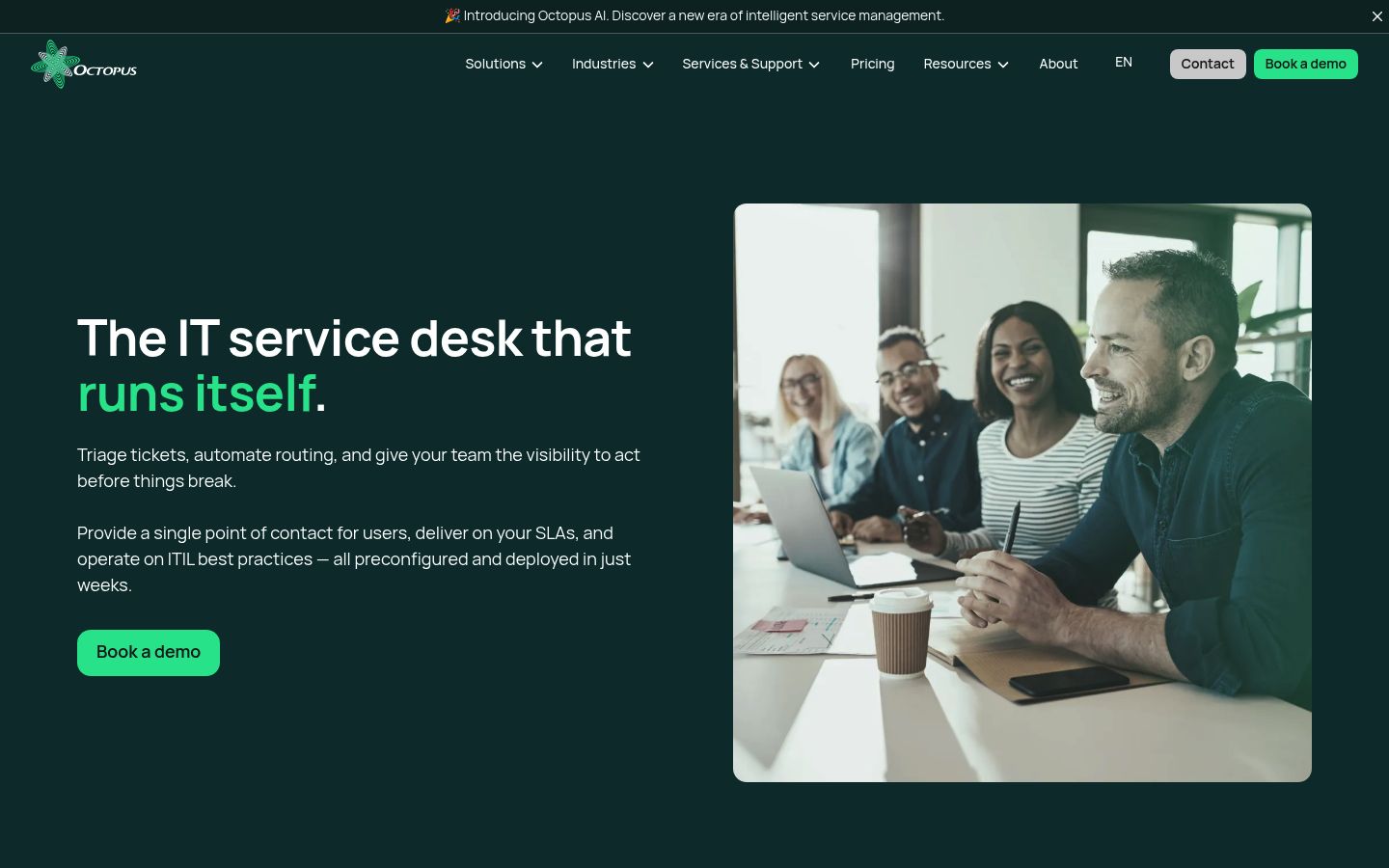
If you are leaving HaloITSM, start with the reason for the move. Octopus ITSM is the alternative to look at first for a Quebec team that wants a local partner. Freshservice is the closest fit for a fast cloud migration, Jira Service Management suits teams already working in Atlassian, and ServiceNow fits complex enterprise governance.
ManageEngine ServiceDesk Plus keeps licensing and deployment flexible. Octopus ITSM is the strongest choice for Quebec teams that need Canadian hosting, bilingual support, and configuration help from a local team.
HaloITSM remains a credible baseline. Its public pricing page lists £69 per agent per month when billed annually, with unlimited functionality and asset management included.
The alternatives below make sense when your priority is a different price model, a specific ecosystem, more control over deployment, or a partner who understands Quebec operations. Prices and product details were checked on November 9, 2026.
How to compare HaloITSM alternatives
Compare the platforms on five questions before you plan a migration:
- Asset context: Can agents see the device, software, contract, or service connected to a request?
- Automation: Can the platform route, approve, escalate, and report on work without manual triage?
- Support: Will your team get help in the language and time zone it uses?
- Migration effort: Can you map users, categories, workflows, knowledge, assets, and reporting without rebuilding everything at once?
- Administration: Can your own team change forms and workflows, or will every change become a vendor project?
The list is ordered by the different reason each product can replace HaloITSM, not by a universal score. A pilot with an anonymized set of tickets is still the best way to check fit.
| Alternative | Best fit | Asset management | Automation and workflow | Public price checked November 9, 2026 | Main tradeoff |
|---|---|---|---|---|---|
| Octopus ITSM | Quebec teams needing local, bilingual support | IT asset and license management | Configurable workflows and Octopus AI Assistant | Not published on the page checked | You need a quote and a fit discussion |
| Freshservice | Fast cloud migration | IT asset management and CMDB capabilities | Workflow automation, orchestration, AI features | From US$19 per agent per month, billed annually | Some advanced capabilities and AI features vary by plan |
| Jira Service Management | Teams already using Atlassian | Assets and configuration management on Premium and Enterprise | No-code automation, forms, workflows, incident response | From US$21.50 per agent per month | Advanced asset management is not on every plan |
| ServiceNow ITSM | Large organizations with complex governance | Asset management, CMDB, cost management | Workflow automation, AI agents, predictive intelligence | Custom quote | Price and migration scope require a sales process |
| ManageEngine ServiceDesk Plus | Flexible cloud or on-premises deployment | IT asset management priced with asset counts | Ticketing, purchasing, contracts, AI support | From US$13 per technician per month for Standard | The license model changes with technicians and assets |
1. Octopus ITSM: the Quebec-focused alternative
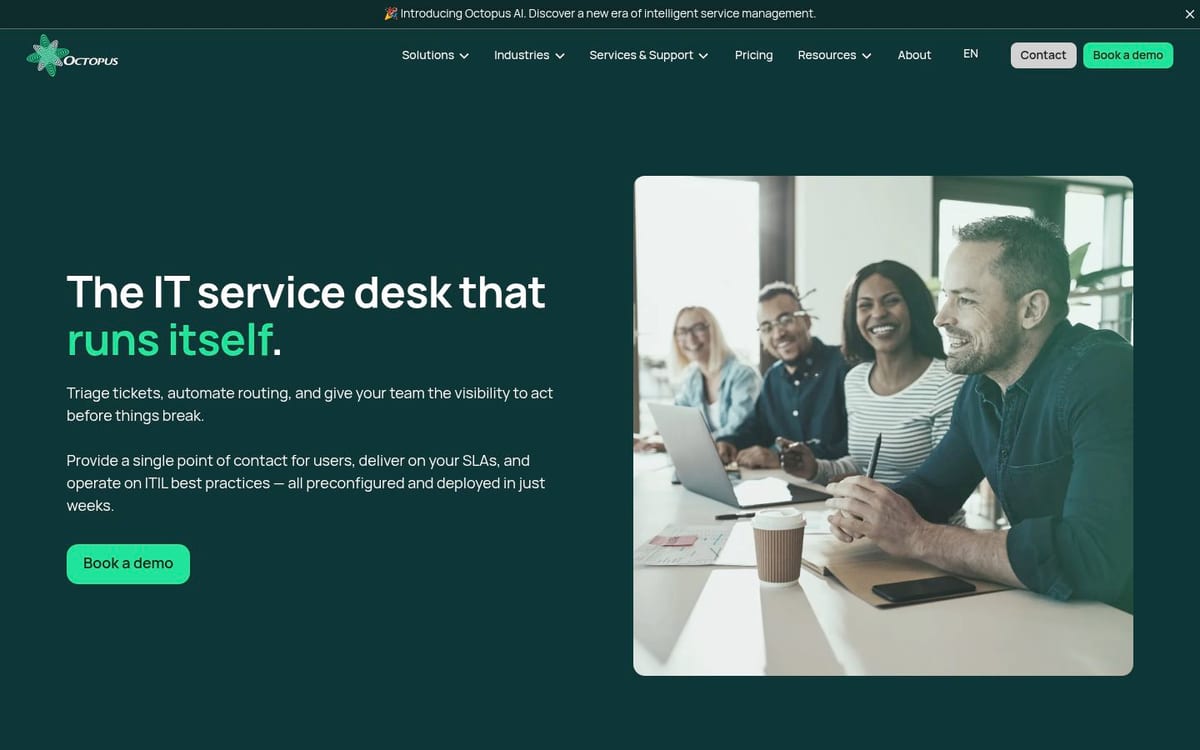
Octopus ITSM is the alternative to put first when the buying team is in Quebec and needs a partner that understands local operations. Its English ITSM page describes incident, request, problem, and change management, IT asset and license management, dashboards, custom reports, SLA and XLA tracking, an open REST API, webhooks, and Microsoft 365 and Teams integration.
The page says data is hosted in Canada and that implementation can happen in a few weeks while reflecting industry requirements. Treat that as the vendor's published positioning, not a delivery guarantee.
The Octopus AI Assistant is the main differentiator. It can create fields, forms, and workflows through natural-language conversation, analyze operational data for gaps, suggest improvements, categorize and route requests, and prioritize work.
It proposes changes while teams keep control of decisions. That can reduce the administration burden in a migration because your team can shape the new environment as it learns which processes should stay and which should change.
Support is available in English and French through a Quebec-based team. That matters when the service desk supports francophone users, public-sector teams, health organizations, or departments that need help after go-live.
Octopus does not publish a price on the page checked, so ask for the price per active agent, the modules in scope, implementation services, integrations, and support terms in the same quote.
Choose Octopus if local support, Canadian hosting, bilingual service, and configuration autonomy are part of the decision. It may not be the right first call if you need a public self-serve price or a global ecosystem with a large marketplace.
2. Freshservice: the practical cloud replacement
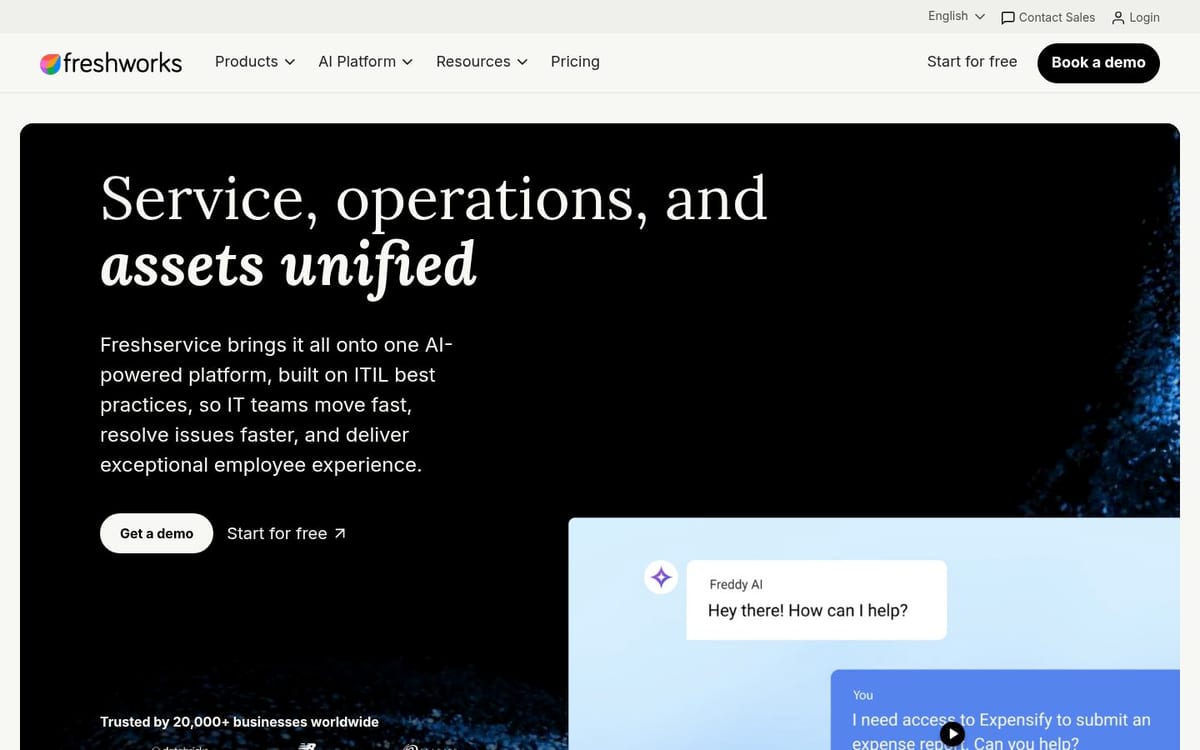
Freshservice is the first alternative to examine if you want a hosted service desk with a familiar agent-based price. Freshworks lists Starter at US$19 per agent per month, Growth at US$49, and Pro at US$99, all billed annually. Enterprise pricing is custom. The same page lists incident, problem, change, release, service catalog, SLA, knowledge, and workload management.
Asset work is a clear strength. Freshworks describes automated discovery across on-premises, cloud, and hybrid environments, lifecycle tracking, contracts, software assets, and a CMDB. Its orchestration tools connect outside applications to workflows, which matters when a HaloITSM migration includes onboarding, software provisioning, or approvals beyond the service desk.
Freshservice suits a team that wants to import users, categories, knowledge, and core workflows first, then add discovery and orchestration. The tradeoff is plan design. Check which IT asset management, AI, and reporting features are included in the plan you would actually buy. A low entry price is not the same as a low total cost after add-ons and implementation.
Choose Freshservice if speed and a conventional cloud rollout matter most. Look elsewhere if Canadian hosting, bilingual local support, or deep control of the configuration matters more than a broad SaaS catalog.
3. Jira Service Management: the Atlassian-connected option
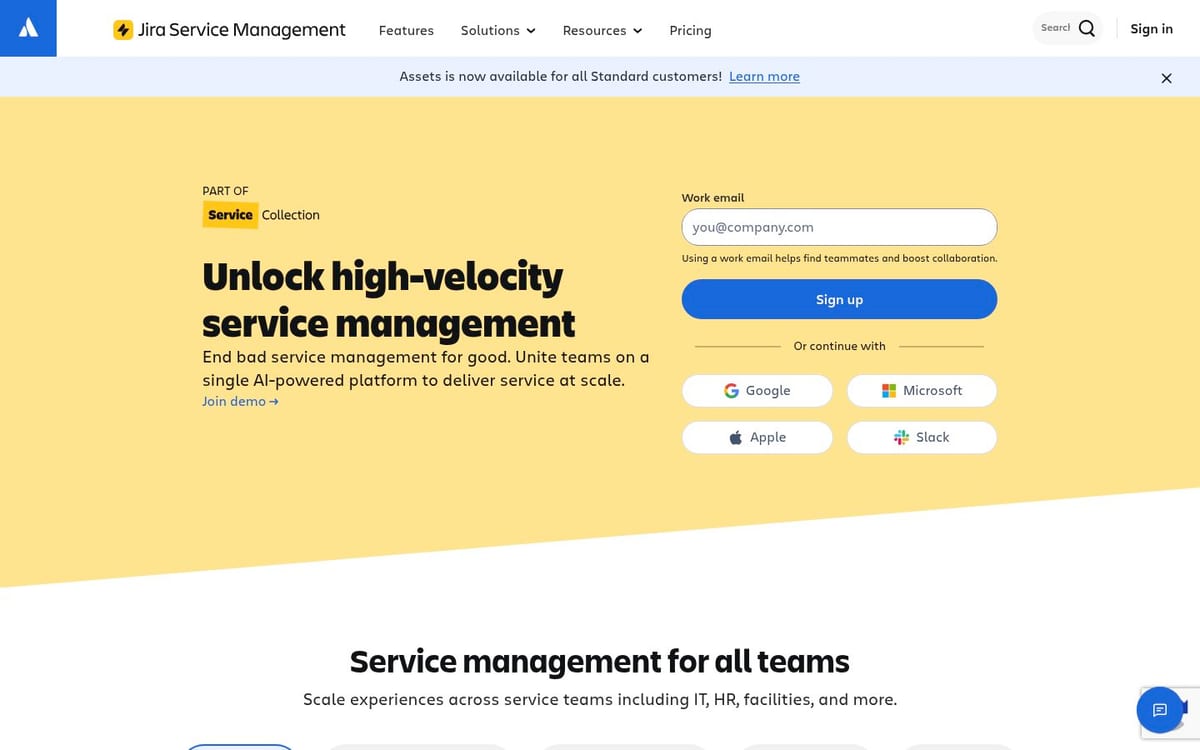
Jira Service Management is a natural HaloITSM alternative when development and IT teams already use Jira, Confluence, or other Atlassian tools. Atlassian lists a Free plan for three agents, Standard at US$21.50 per agent per month, and Premium at US$55.28, with custom Enterprise pricing.
The page checked also lists multi-channel support, forms, workflows, knowledge, incident monitoring, and automation steps.
Assets can connect directly to requests, incidents, changes, and employee workflows. Atlassian places advanced asset and configuration management in Premium and Enterprise, so confirm the plan boundary before you compare it with HaloITSM's all-in pricing. Teams that need a clear link between a service request and a software delivery issue may value the shared Atlassian context.
The migration question is less about importing tickets than about translating operating habits. Map HaloITSM categories and approval paths to Jira request types, workflows, queues, and Assets objects. Then test permissions and notifications with a technician, a manager, and a user who submits requests. A configuration that looks simple to an administrator can feel unfamiliar to the people opening tickets.
Choose Jira Service Management if your organization already has Atlassian skills and wants development work beside service work. Choose another option if non-technical departments need a more dedicated service-management experience or if advanced assets would force a higher plan than expected.
4. ServiceNow ITSM: the enterprise governance choice
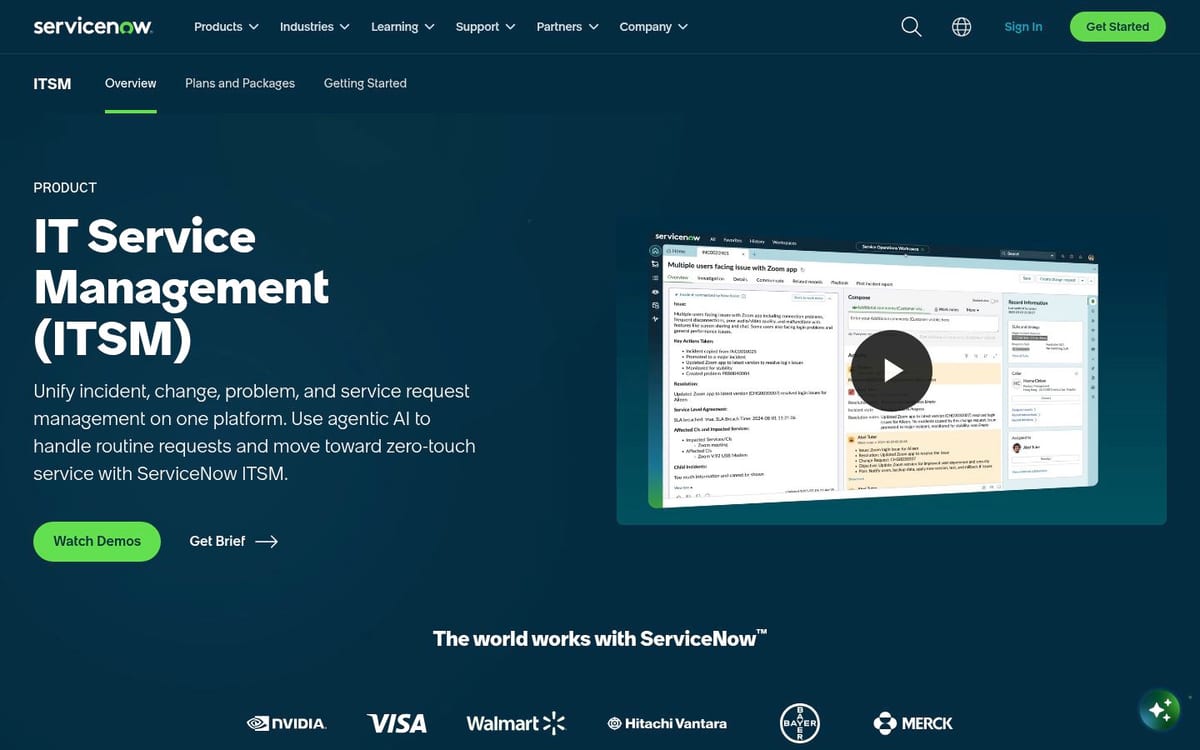
ServiceNow is the option to evaluate when HaloITSM is no longer enough for a large service organization with strict governance, multiple departments, or a broad workflow program. ServiceNow's ITSM pricing page does not publish a standard price. It offers custom packages that include combinations of incident, request, problem, change, asset, cost, CMDB, knowledge, workflow automation, and AI capabilities.
The platform's breadth can help when IT is only one part of the move. Asset management, digital portfolio management, virtual agents, predictive intelligence, and application development sit beside core ITSM capabilities. That makes it possible to connect IT work with enterprise workflows, but it also makes the migration larger.
Treat ServiceNow as a programme, not a quick tool swap. Define which HaloITSM processes are worth keeping, which records need history, and who owns the target data model.
Ask for a written estimate that separates subscriptions, implementation, integrations, training, and ongoing administration. Since the public page does not give a price, a direct comparison with HaloITSM's per-agent figure would be misleading.
Choose ServiceNow if governance, scale, and cross-department workflows justify a formal implementation. It is less attractive when a small team wants to configure a service desk quickly without a large consulting effort.
5. ManageEngine ServiceDesk Plus: flexible licensing and deployment
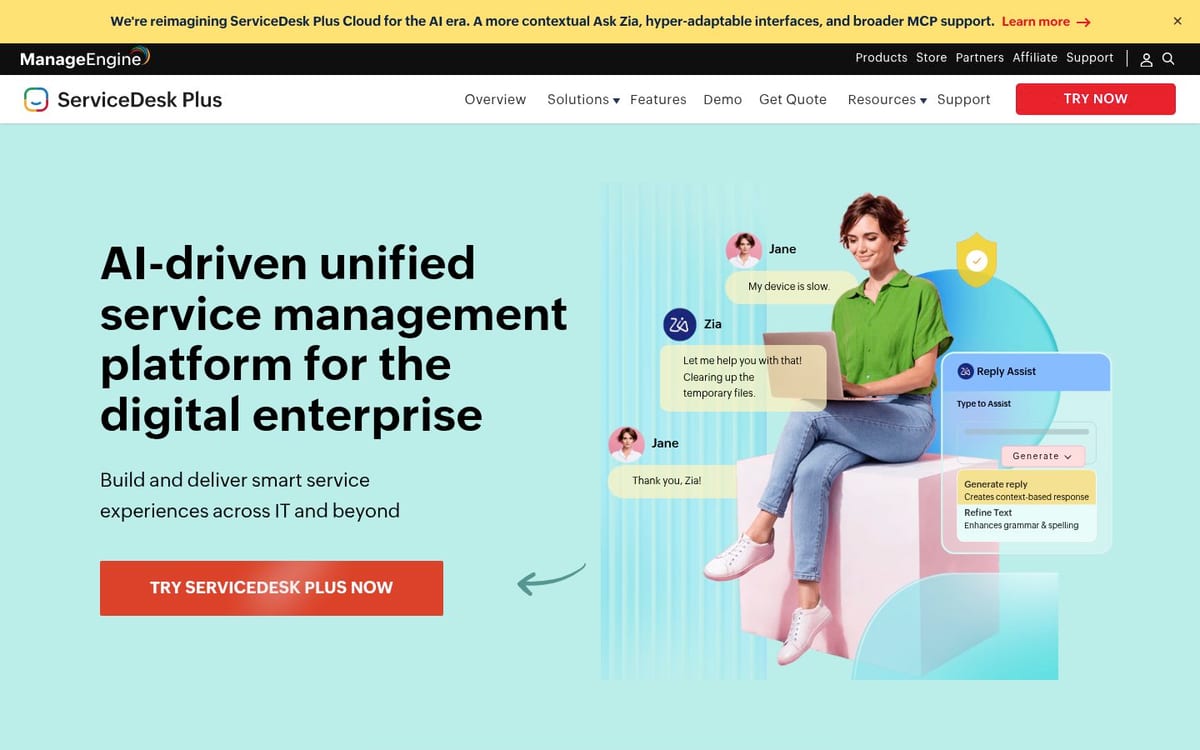
ManageEngine ServiceDesk Plus is worth a close look if you want to choose between cloud and on-premises deployment. The pricing page lists Standard at US$13 per technician per month, Professional at US$27, and Enterprise at US$67.
It also lists a free Standard edition for up to five technicians, with separate annual examples based on technician and asset counts. Those are US prices, so request a Canadian quote and confirm taxes, currency, and renewal terms.
The product combines ticketing with asset tracking, purchasing, project management, and contract management. The pricing page says IT asset management is priced by the number of assets managed. That makes the platform a useful candidate when your HaloITSM replacement has to account for both the service desk and a defined hardware inventory.
The tradeoff is the license model. You need to count technicians and assets, not only employees who submit requests. During a pilot, measure how many administrative users need paid access, how many assets need lifecycle records, and which AI functions you need. Also decide whether on-premises control is worth taking on infrastructure, updates, backups, and operational ownership.
Choose ServiceDesk Plus if deployment choice and a visible technician-and-asset model matter. Choose a simpler cloud platform if your team does not want to own those operational decisions.
A migration plan that limits risk
Do not move every HaloITSM record on day one. Start with a short pilot:
- Export a representative sample of incidents, requests, changes, knowledge articles, users, categories, and assets.
- Keep a mapping sheet for statuses, priorities, groups, approvals, SLAs, and ownership.
- Rebuild three workflows: a common request, a high-priority incident, and an approval that crosses departments.
- Ask a technician to work the queue, a manager to read the reports, and a French-speaking user to submit a request.
- Compare search, notifications, audit history, asset context, reporting, and administration time.
- Decide what history must move and what can remain read-only in HaloITSM.
This approach separates a product gap from a migration mistake. It also gives you evidence for the implementation estimate rather than relying on a feature checklist.
Which HaloITSM alternative should you choose?
Choose Freshservice for a straightforward cloud replacement with a broad service-desk feature set. Choose Jira Service Management when Atlassian already anchors your development and operations teams. Choose ServiceNow when governance and enterprise workflows justify a formal programme. Choose ManageEngine ServiceDesk Plus when you need cloud or on-premises deployment and want licensing tied to technicians and assets.
Choose Octopus ITSM when the decision includes Quebec support, bilingual service, Canadian hosting, and a team that wants to configure its own workflows with help from the Octopus AI Assistant. The right answer is the platform that fits the way your teams work after migration, not the one with the longest feature list.
Frequently asked questions
What is the closest alternative to HaloITSM?
Freshservice is the closest general-purpose cloud alternative for a team that wants agent-based pricing, service-desk workflows, asset management, and automation. Jira Service Management is closer for an Atlassian-centered team, while Octopus ITSM is closer for a Quebec organization that values bilingual local support and Canadian hosting.
Which HaloITSM alternative has public pricing?
Freshservice, Jira Service Management, and ManageEngine ServiceDesk Plus publish entry prices on the pages checked on November 9, 2026. ServiceNow publishes custom pricing, and Octopus ITSM does not publish a price on its English ITSM page. Compare the billing unit as well as the headline price: the platforms use agents, technicians, assets, or a custom quote in different ways.
Which alternative is best for asset management?
All five options describe asset capabilities, but the best fit depends on your inventory. Freshservice focuses on discovery, lifecycle, contracts, and a CMDB. Jira Service Management connects assets to requests and changes, with advanced asset management on higher plans.
ServiceNow covers asset and cost management at enterprise scale. ManageEngine ties asset management to asset counts. Octopus ITSM provides IT asset and license management with a Canadian-hosted service desk.
How hard is it to migrate from HaloITSM?
The effort depends on how many workflows, integrations, knowledge articles, assets, and historical records you need to preserve. A pilot with three representative workflows shows the real work faster than a feature comparison. Keep a mapping sheet and decide early which HaloITSM history must move and which can remain read-only.
Is Octopus ITSM a good fit for Quebec organizations?
It can be a good fit when bilingual support, Canadian hosting, and local implementation context matter. Octopus says its support team is based in Quebec, supports English and French, and provides hands-on help after deployment. Ask for current scope, pricing, implementation milestones, and support terms before making a final decision.
What should we test before replacing HaloITSM?
Test a common request, a high-priority incident, an approval, a knowledge search, an asset lookup, a report, and a workflow change. Include a technician, a manager, and a French-speaking requester. Record the clicks, handoffs, data gaps, and administration time for each platform.
Sources and references
- HaloITSM pricing, checked November 9, 2026: HaloITSM's published annual agent price and included capabilities.
- Freshservice pricing, checked November 9, 2026: Freshservice plan prices and service-desk capabilities.
- Atlassian Service Collection pricing, checked November 9, 2026: Jira Service Management prices, plans, automation, and asset-management availability.
- ServiceNow ITSM pricing, checked November 9, 2026: custom pricing and ITSM, asset, workflow, and AI capabilities.
- ManageEngine ServiceDesk Plus pricing, checked November 9, 2026: technician prices, asset-based pricing, and cloud or on-premises options.
- Octopus ITSM software, checked November 9, 2026: ITSM features, Canadian hosting, implementation positioning, and integrations.
- Octopus AI Assistant, checked November 9, 2026: conversational configuration, recommendations, routing, and team control.
- Octopus customer support, checked November 9, 2026: Quebec-based bilingual support and Canadian hosting.
Also to be read
Explore more articles on incident management and ITSM best practices.